

 Back
Back

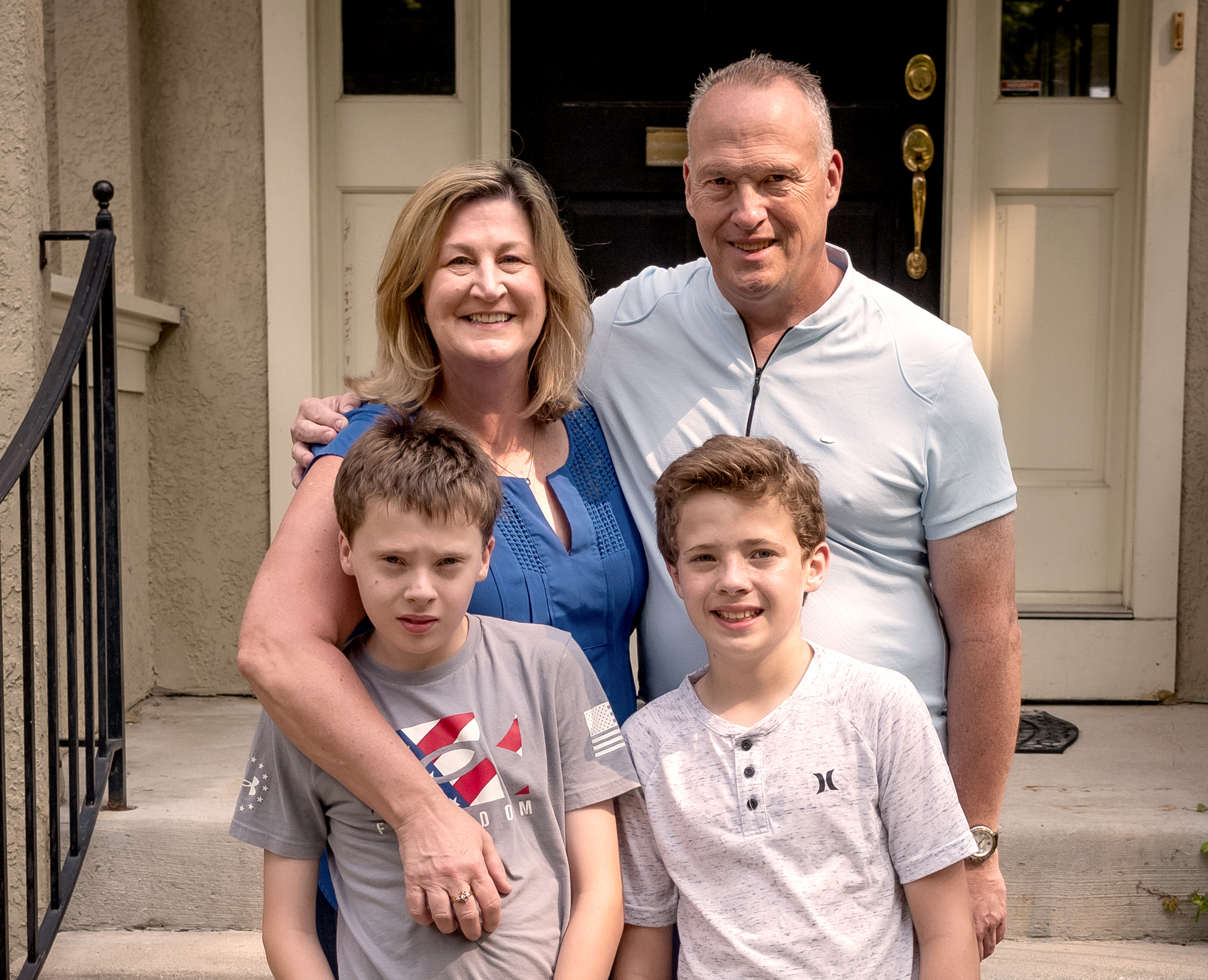
Heather & David
But Heather Lindstrom and her husband David were well beyond divvying up chores – they were planning for a family, and early on, knew that they would build their family by serving as foster parents.
“We knew that was our calling, how we wanted to handle our family, our life. We went into it being really excited and nervous to foster but with the hopes of helping families reunify,” says Heather, who became a foster parent on April 9, 2013.
However, reunification turned out not to be possible for the medically complex, seven-year-old boy living with the Kings. He couldn’t go “back home” and needed a permanent home. “Once it was established that there was no return home plan, there was no huge discussion about it,” Heather says. “We were sold on adopting him. It seemed very natural because we couldn’t do what we initially set out to do—which is reunify with a family—but we could be a family. So he’s our family!”
The transition toward becoming a family hasn’t been entirely “warm and fuzzy and going to the park,” says Heather, who says her son needed a stable house, unconditional love and healthy boundaries that reinforce acceptable behavior.
Elated to become adoptive parents, Heather says that she works with JCFS to make sure that their son is able to maintain relationships with his siblings, who each live in different foster homes. In fact, their son visits with his siblings and their foster families often enough that she describes it as a “huge, extended family.”
“If anybody would’ve asked us a year ago where we’d be today, it never would’ve been serving as a permanent home for somebody. But it’s wonderful and we’ve been able to meet other foster parents and really gain a nice support network with other foster parents and we are always reminded, even in little things, of how grateful we are to have JCFS Chicago and this incredible team around us helping to care for the kids."
In the past year, Heather and her family have traveled together, held a first-ever birthday party for their son and welcomed a “little sister” to their home – a second, medically complex child who is two years old and has a return-home goal.
“We knew that serving as foster parents would mean that our lives will be full and busy…and we knew that part of that meant that we might get our hearts broken, too. But the reality is that in the foster and adoption system, the plusses and minuses of all of it, is that it all stems from love.”
Heather adds, “I don’t know that it’s ever truly possible to prepare foster parents for what they’re going to see but with the right support network, it’ll work, and that’s what we found with JCFS Chicago. The support network whether it’s 9-5 or nine at night, somebody is available to help assist us that we’re doing the very best we can for the child. “

We're Here
to Help.
For assistance or more information, call us at 855.275.5237 or email us at Ask@JCFS.org.
Grandma Niecy
To Genise, it did not matter that she had no biological ties to the girl, or that she had already raised two sons and was this close to the freedom of an empty nest. What mattered most was that the girl who once knew her as her “Grandmother,” and whose biological parents led troubled lives, needed her help.
“She’s been in my life since the day she was born,” says Genise of her now 15-year-old foster granddaughter. “Her aunt was dating my son, and so she began life thinking of me as her grandmother.” However, when the relationship between the son and aunt ended, the girl lived with another aunt, and then another. Genise lost touch, but not memories, and began to look for her. When she found her, she also found a handful of drama.
“I have had a lot of rough days with her, her behavior was so out of control,” Genise says. “At one point, her school was calling my job every single day to the point where I told a co-worker that if they called me one more time, tell them I don’t work there anymore,” she says with laughter. “She gave me hell…but I’d do it over again. When it comes down to it, kids like her need a lot of love just like the rest of us, a lot of attention and a lot of time to learn how to trust.”
With support from the JCFS team, Genise gave her granddaughter what she needed most – love, attention and trust. Soon, maturity and better behavior arrived and drama evaporated. Genise became the girl’s confidante and supporter; they now share movies, shopping, manicures and teenage secrets, and Genise beams at her granddaughter’s straight-A, honor-roll grades.
“So many of my friends told me to give her back – but I couldn’t. So many people had given up on her, she had been placed in so many different homes and everybody who told her that they weren’t going to get rid of her, did.”
“But I could not. When I was coming up as a kid, I wasn’t an angel. I looked at it this way – my parents didn’t give up on me, my mother didn’t give me away. I couldn’t give her away.”
It’s clear that Genise’s granddaughter holds a precious place in her heart. And, though she’s not quite an empty-nester, Genise has even had time to foster-care a second daughter in the past year, as well as keep her regular hair and nail appointments. “I’m the flashy type of grandmother…they call me Grandma Niecy,” she says with a wink.
We're Here
to Help.
For assistance or more information, call us at 855.275.5237 or email us at Ask@JCFS.org.
Leonardo's Story
A new life in a new land
Before Leonardo arrived in the United States, he was full of anxiety and scared. Coming
from Colombia he did not know the language or culture, let alone anyone who lived
here. Arriving in Chicago earlier this year through the Refugee Resettlement program,
which is part of HIAS Immigration & Citizenship, Leonardo felt like he found a friend
when he met Jamshid Daudzai, his case manager.
All refugees that HIAS helps resettle in the area are set up in an apartment with
furniture, kitchen essentials, food, and other necessities. In addition to federal dollars,
funds from generous donors who want to support those looking for a new life in a new
land are used to make sure they have a place to call home.
Leonardo knew finding work would be hard, especially since at the time he only spoke
Spanish. However, with help from Jamshid, he got a job cleaning airplanes at O’Hare
Airport and began taking classes to learn English. The language barrier can have a
significant impact on the well-being of refugees when facing legal issues, a job search,
finding transportation, and even making friends. The circumstances of his life in
Colombia were hard, but Leonardo tries to see the positive in everything.
We're Here
to Help.
For assistance or more information, call us at 855.275.5237 or email us at Ask@JCFS.org.